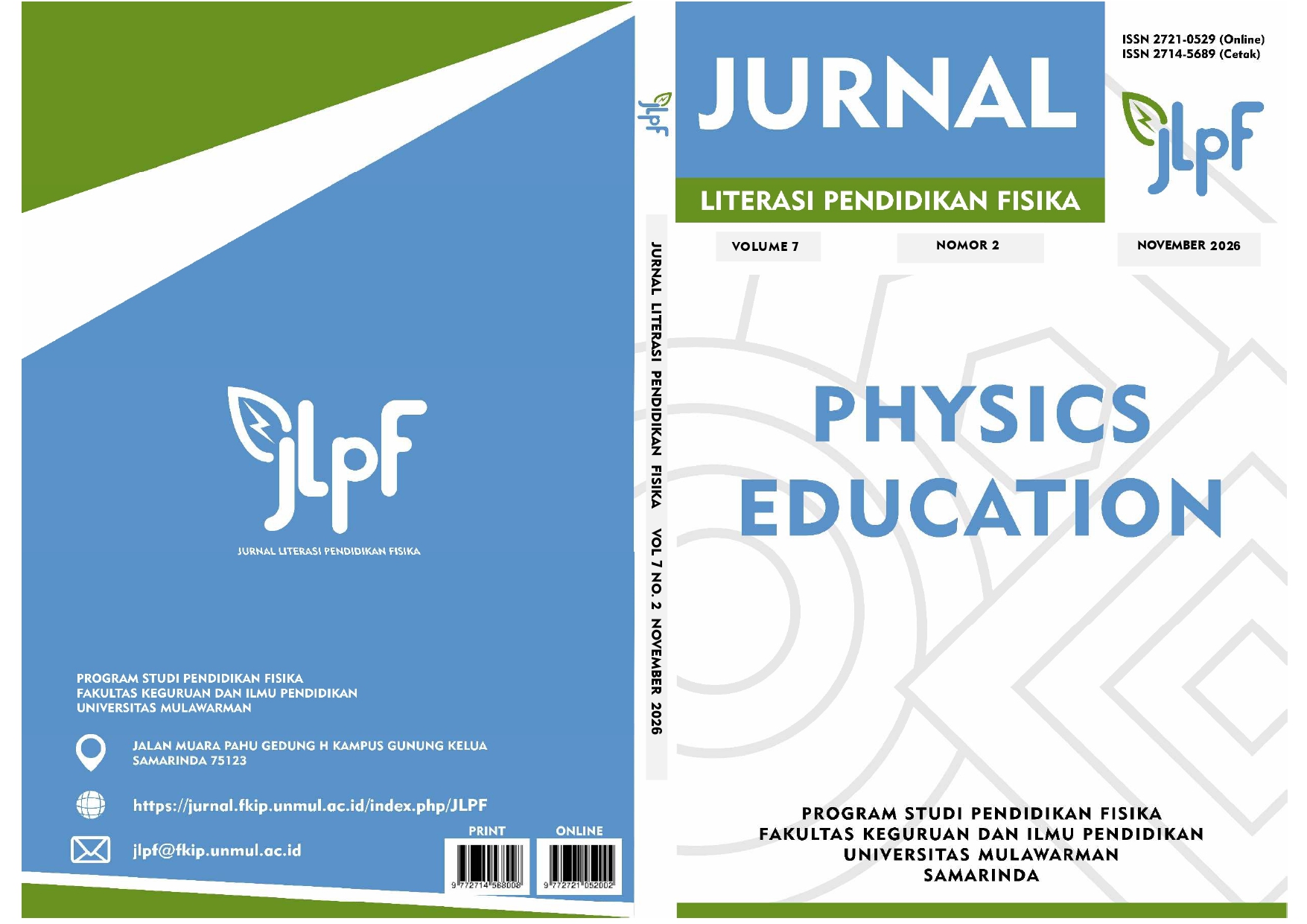
Scientific Argumentation in Physics Learning and Its Influence on Scientific Literacy: A Systematic Literature Review
DOI:
https://doi.org/10.30872/jlpf.v7i2.6790Keywords:
Scientific Argumentation, Physics Learning, Scientific Literacy, STEMAbstract
This study uses a systematic literature review approach. There are 22 articles that are analyzed in depth and comprehensively using the PRISMA (Preferred Reporting Items for Systematic Review and Meta-Analysis) method. The stages of the PRISMA method consist of identification, screening, eligibility, and inclusion. The databases used are Scopus and Google Scholar. This study consists of 3 research questions, namely (1) research trends on scientific argumentation in physics learning; (2) implementation of scientific argumentation in physics learning; and (3) the influence of scientific argumentation on students' scientific literacy. The findings of this study are: (1) research trends on scientific argumentation in physics learning are mostly conducted in Indonesia; the year of most publications is 2025, the most frequently used research method is the quantitative approach, and the research subjects are junior high and senior high school students; (2) this study explains that scientific argumentation in physics learning integrates one or more STEM components and the most widely used Toulmin argumentation pattern; (3) scientific argumentation in physics learning has a positive influence on students' scientific literacy skills.
Downloads
References
Anshori, D., & Sastromiharjo, A. (2023). Effectiveness of epistemic beliefs and scientific argument to improve learning process quality. International Journal of Instruction, 16(2), 493-510. https://e-iji.net/ats/index.php/pub/article/view/153
Batrisyia, S. Q., Suwarna, I. R., & Liliawati, W. (2024). Implementation of a STEM-Based Project-Based Learning Model to Improve Students' Science Process Skills on Alternative Energy Material. Jurnal Penelitian Pembelajaran Fisika, 15(4), 418-424. https://doi.org/10.26877/jp2f.v15i4.955
Bingöl, A., & Baran, M. (2023). Türkiye’de fizik eğitimi alanında yapılan STEM çalışmalarının incelenmesi. Eğitim Bilim ve Araştırma Dergisi, 4(2), 372-405. https://dergipark.org.tr/en/pub/ebad/article/1314866
Darmaji, D., Astalini, A., Kurniawan, D. A., & Triani, E. (2022). The effect of science process skills of students argumentation skills. Jurnal Inovasi Pendidikan IPA, 8(1), 78-88. https://doi.org/10.21831/jipi.v8i1.49224
El Meraoui, M., Ninis, O., Abdoune, A., El Boujnani, S., Erradi, M., & Khaldi, M. (2024). Designing and developing a training system based on the STEM approach; case of physical science teaching: research methodology. Global Journal of Engineering and Technology Advances, 21(3), 133-143. https://doi.org/10.30574/gjeta.2024.21.3.0239
Fauziah, A. N. M., Hendratmoko, A. F., Mahdiannur, M. A., Ermawan, M. Z. F., Suwandi, E., & Ratri, S. Y. (2024). Relationship between critical thinking and scientific argumentation in science learning. Jurnal Pendidikan IPA Indonesia, 13(2). https://doi.org/10.15294/pwqxcp96
Hasanah, F., & Putra, P. D. A. (2022). Identifikasi kemampuan siswa SMP dalam berargumentasi melalui pendekatan pembelajaran science, technology, engineering, and mathematics (STEM). Jurnal Literasi Pendidikan Fisika (JLPF), 3(1), 1-9. https://doi.org/10.30872/jlpf.v3i1.974
Hasanah, N. F. S., Suyidno, S., & Mahtari, S. (2022). Perangkat pembelajaran kooperatif berbasis stem: usaha untuk meningkatkan literasi sains peserta didik. Journal of Banua Science Education, 3(1), 61-71. https://doi.org/10.20527/jbse.v3i1.143
Hayat, N. (2024). Pengaruh Pendekatan STEM Terhadap Peningkatan Pemahaman Konsep Fisika Di Sekolah Menengah Atas. Jurnal Ilmiah IPA Dan Matematika (JIIM), 2(2), 34-38. https://doi.org/10.61116/jiim.v2i2.471
Hikmah, N., Siregar, I. H., Mufit, F., Lufri, L., & Andromeda, A. (2025). The Effect of STEM Integration in Science and Physics Learning on Students' Scientific Attitudes: A Meta-Analysis. Formatif: Jurnal Ilmiah Pendidikan MIPA, 15(1). Hikmah, N., Siregar, I. H., Mufit, F., Lufri, L., & Andromeda, A. (2025). The Effect of STEM Integration in Science and Physics Learning on Students' Scientific Attitudes: A Meta-Analysis. Formatif: Jurnal Ilmiah Pendidikan MIPA, 15(1). http://dx.doi.org/10.30998/formatif.v15i1.27275
Himsar, H., & Harahap, F. H. (2024). Penerapan Metode STEM pada Proses Pembelajaran Fisika Berbais Pendekatan Saintifik untuk Meningkatkan Keterampilan Berpikir Kritis. Gravity Journal, 3(1), 36-43. https://doi.org/10.24952/gravity.v3i1.11724
Irawan, L. A. L. M., & Suyono, S. (2024). Science Literacy Support for Improving Students Argumentation Skills. Jurnal Pijar MIPA, 19(5), 753-757. https://doi.org/10.29303/jpm.v19i5.7256
Isa, S. S. P. M. (2024). The ProjectBased Learning (STEM Model) In Fundamental Physics Learning. International Journal of Modern Education, 6 (21), 640-654.
Limiansih, K., Sulistyani, N., & Melissa, M. M. (2024). Persepsi guru SMP terhadap literasi sains dan implikasinya pada pembelajaran sains di sekolah. Jurnal Pendidikan MIPA, 14(3), 786-796. https://doi.org/10.37630/jpm.v14i3.1858
Mafaza, O. U., Siswanto, S., & Singgih, S. (2025). Analisis Tren Penelitian Argumentasi Ilmiah dalam Pembelajaran IPA Tahun 2015–2024: Sebuah Studi Bibliometrik. Instructional Development Journal, 8(3), 543-556.
Marwah, A. S., & Pertiwi, F. N. (2024). Literasi sains siswa dalam berinovasi pada pembelajaran IPA berbasis produk. Jurnal Tadris IPA Indonesia, 4(1), 114-126. https://doi.org/10.21154/jtii.v4i1.3064
Mauladhani, A. E., Safitri, I. A., Fakhira, A. A., Rohman, M. F., Mahardika, I. K., & Baktiarso, S. (2023). Profil Peningkatan Literasi Sains Peserta Didik pada Pembelajaran Fisika di Sekolah Menengah Pertama. Jurnal Fisika Papua, 2(1), 51-54. https://garuda.kemdiktisaintek.go.id/documents/detail/3752635
Minarti, I. B., Dzakiy, M. A., & Nilautama, D. (2022). The Effect of STEM (Science, Technology, Engineering, and Mathematics) Based Learning Approach on Critical Thinking Skills and Cognitive Learning Outcomes of Class X SMA Negeri 1. At-Tasyrih: jurnal pendidikan dan hukum Islam, 8(2), 126-136. https://ejournal.unisbajambi.ac.id/index.php/attasyrih/article/view/151
Muslim, M., Sihombing, R. A., Zakwandi, R., & Karimi, A. (2024). Evaluating Students' Argumentation Skills Using an Argument-Generating Learning Model Supported Toulmin’s Argumentation Pattern in Physics Concepts. Jurnal Pendidikan IPA Indonesia, 13(4).
Muspiroh, N., Shofiyah, S., Nada, S., & Kusmawan, U. (2024). Enhancing students' scientific argumentation skills through STEM-based problem based learning. International Journal of Research in STEM Education, 6(1), 85-96. https://doi.org/10.33830/ijrse.v6i1.1691
Nirmala, P., Barid, S. S. A. U. Q., Astuti, S. R. D., & Wahyuni, S. (2026). Studi literatur: Efektivitas model problem-based learning terhadap keterampilan argumentasi ilmiah peserta didik pada pembelajaran sains. Papanda Journal of Mathematics and Science Research, 5(1), 70-87. https://doi.org/10.56916/pjmsr.v5i1.3026
Norlaili, N., Al Huda, A. M., Yuliani, H., & Azizah, N. (2022). Literature research: the use of science, technology, engineering and math (STEM) in physics learning. Jurnal Ilmiah Pendidikan Fisika, 6(1), 45. https://doi.org/10.20527/jipf.v6i1.4153
Pratama, R., Alamsyah, M., Siburian, M. F., Marhento, G., Jupriadi, J., Jonathan, G. L., & Susanti, W. (2024). Analisis Kemampuan Literasi Sains Peserta Didik pada Mata Pelajaran IPA. Jurnal Pendidikan MIPA, 14(2), 576-581. https://doi.org/10.37630/jpm.v14i2.1619
Rizki, S., Mastuang, M., & Salam, A. (2022). Pengembangan perangkat pembelajaran model direct instruction untuk melatihkan keterampilan proses sains siswa sma materi gerak melingkar. Jurnal Pesona Dasar, 6, 55-65. https://doi.org/10.20527/jipf.v6i1.3295
Rohmaya, N. (2022). Peningkatan literasi sains siswa melalui pembelajaran IPA berbasis Socioscientific Issues (SSI). Jurnal Pendidikan MIPA, 12(2), 107-117. https://doi.org/10.37630/jpm.v12i2.553
Salsabila, T., Siringoringo, I. M., Sipahutar, S., Kasih, J. C. O., Hutabarat, N., Tambunan, S. E., & Panggabean, D. D. (2025). The Role of Science Literacy in Improving the Quality of Physics Learning at High School Level: A Literature Review. Venn: Journal of Sustainable Innovation on Education, Mathematics and Natural Sciences, 4(3), 157-163. https://doi.org/10.53696/venn.v4i3.288
Sanjiartha, I. G. D., Suwindia, I. G., & Winangun, I. M. A. (2024). Peran literasi sains dalam membentuk generasi berfikir kritis dan inovatif: kajian literature review. Education and Social Sciences Review, 5(2), 120-128. https://doi.org/10.29210/07essr499900
Syahdah, V. S., & Irvani, A. I. (2023). Kesulitan menanamkan jiwa percaya diri terhadap kemampuan mengerjakan soal fisika. Jurnal Pendidikan dan Ilmu Fisika, 3(1), 163-171. https://journal.uniga.ac.id/index.php/jpif/article/view/1586
Tarigan, F. K. Y. B., Fadieny, N., & Safriana, S. (2024). Pengembangan media pembelajaran fisika berbasis stem untuk meningkatkan kreativitas siswa: sebuah tinjauan literatur sistematis. Jurnal Pendidikan dan Ilmu Fisika, 4(2), 150-160. https://doi.org/10.52434/jpif.v4i2.41398
Yuanata, B. E., Artanti, K. P., Saregar, A., & Deta, U. A. (2022). Profil keterampilan ilmiah peserta didik pada model pembelajaran berbasis Toulmin’s argumentation pattern (TAP) dalam memahami konsep fisika. Jurnal Ilmu Pendidikan Dan Pembelajaran, 1(1), 1-6. https://doi.org/10.58706/jipp.v1n1.p1-6
Yusmar, F., & Fadilah, R. E. (2023). Analisis rendahnya literasi sains peserta didik indonesia: Hasil PISA dan faktor penyebab. LENSA (Lentera Sains): Jurnal Pendidikan IPA, 13(1), 11-19. https://doi.org/10.24929/lensa.v13i1.283
Downloads
Published
Issue
Section
License
Copyright (c) 2026 Jurnal Literasi Pendidikan Fisika (JLPF)

This work is licensed under a Creative Commons Attribution 4.0 International License.
Jurnal Literasi Pendidikan Fisika (JLPF) is an Open Access Journal. JLPF allows the author(s) to hold the copyright and retain the publishing rights. Authors who publish in this journal agree to the following terms:

Jurnal Literasi Pendidikan Fisika (JLPF), published by the Physics Education Program, Universitas Mulawarman is licensed under a Creative Commons Attribution 4.0 International License (CC BY 4.0). This permits anyone to:
1. Share - copy and redistribute the material in any medium or format
2. Adapt - remix, transform, and build upon the material for any purpose, even commercially.
Under the following terms:
1. Attribution - You must give appropriate credit, provide a link to the license, and indicate if changes were made. You may do so in any reasonable manner, but not in any way that suggests the licensor endorses you or your use.
2. No additional restrictions — You may not apply legal terms or technological measures that legally restrict others from doing anything the license permits.